A sump system has four parts that fail independently: the pit, the pump, the check valve and the discharge line. Most "pump failures" are one of the other three.
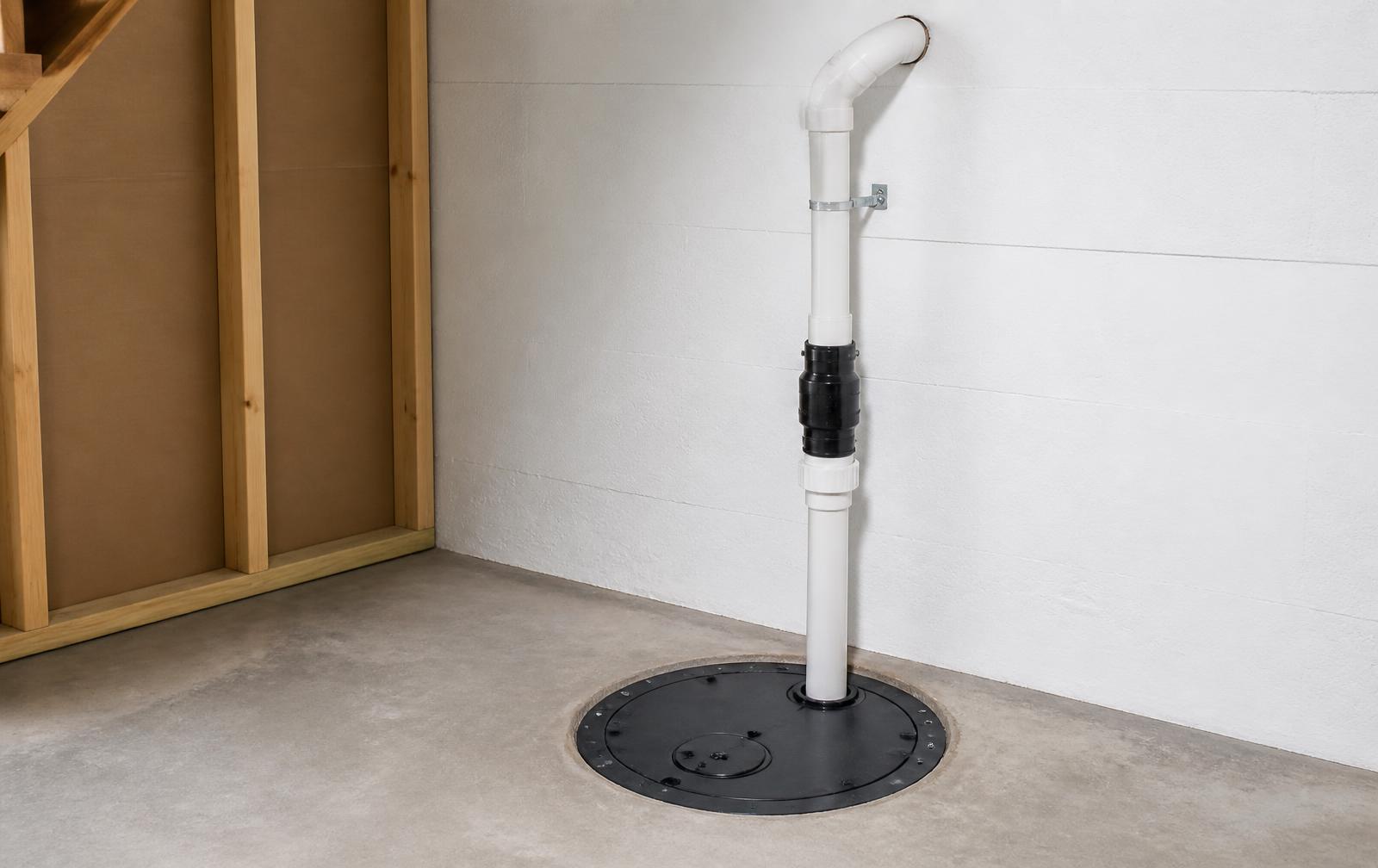
The pit
A basin set into the floor at a low point, usually 18 to 24 inches across, with a perforated wall so groundwater and drain tile flow can enter. Undersized pits force the pump to cycle frequently, which wears out switches. A sealed lid is standard on modern installs.
Pump selection, in plain terms
Sizing is not about buying the largest pump available. It is about matching flow to the height the water must be lifted plus the length of horizontal run. A pump rated at a high gallons-per-hour figure at zero lift may move far less at the eight to ten feet of head a real basement requires.
- Submersible pumps sit in the pit, run quieter and suit sealed lids — the common residential choice.
- Pedestal pumps keep the motor above the water; easier to service, more audible, better in shallow pits.
- Cast iron housings dissipate heat better than plastic in pits that cycle heavily.
- Switch type matters most. A tethered float needs room to swing; a vertical float suits narrow pits.
Discharge routing
A check valve above the pump stops the column of water in the pipe from draining back into the pit each cycle. From there, the line must exit the house and carry water past the backfill zone. Two frequent Ohio problems: discharge dumped a foot from the wall, which recycles straight back to the footing, and buried extensions that freeze solid in January, which makes the pump run against a closed pipe.
Failure signs worth acting on
- The pump runs but the water level barely drops — impeller clog or failing motor.
- It cycles on and off rapidly — check valve failure or a pit that is too small.
- It runs continuously — stuck float, or water arriving faster than the pump can lift it.
- Grinding or rattling noise — worn bearings or a loose discharge line.
- It never runs during storms while the floor gets wet — nothing is reaching the pit; see drain tile repair.
Cost
Straight replacement of a pump in an existing pit generally falls between $1,200 and $2,500 installed, depending on the pump grade and whether the discharge and check valve are also updated. A new pit cut into an existing slab costs more and is usually quoted with the drainage system it serves.