Basements leak in patterns. Before pricing any system, work out which pattern yours matches — the repair follows directly from it.
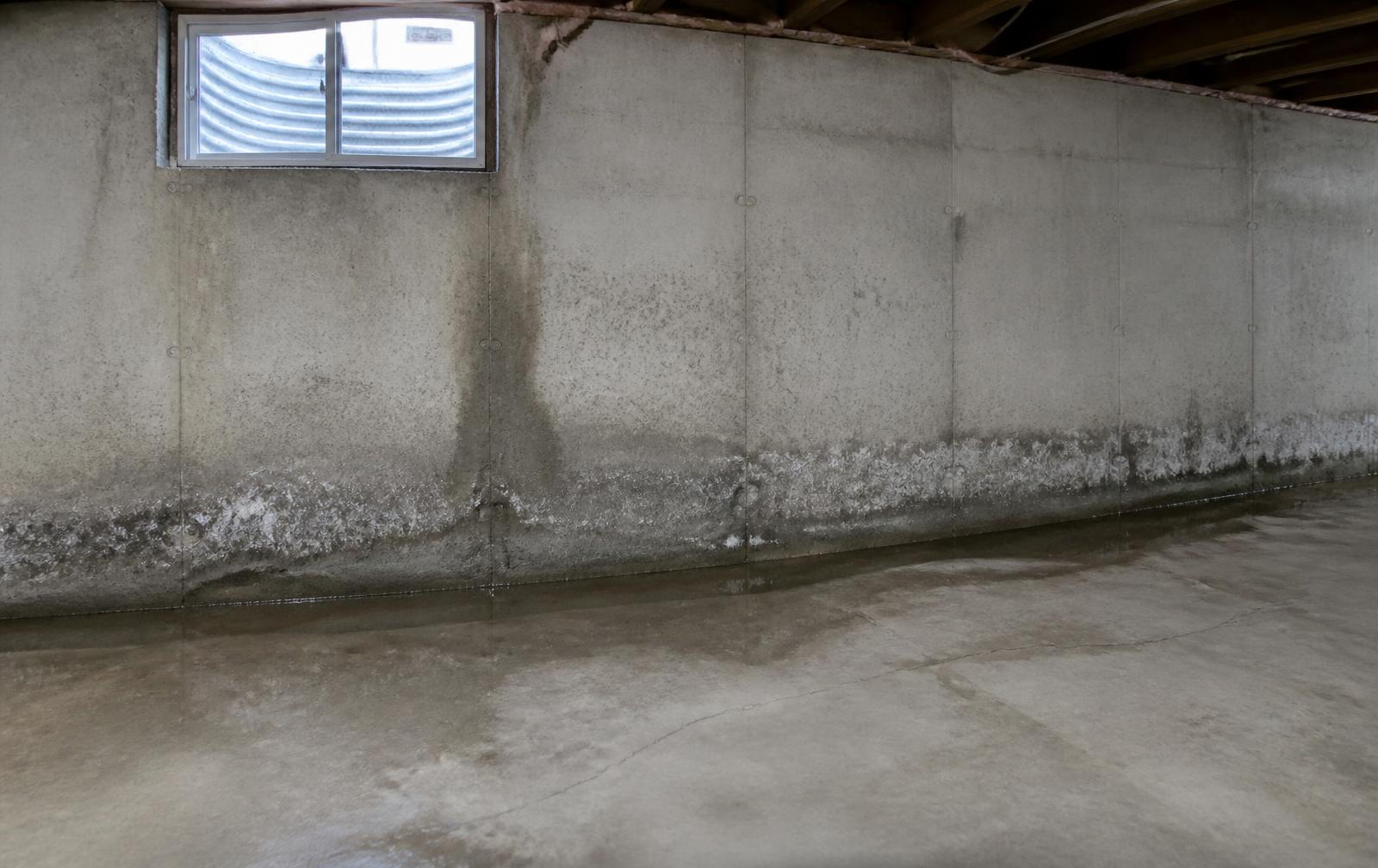
Pattern 1 — water along the base of the wall
Water tracing the floor edge, sometimes on more than one wall, appearing during or just after rain. This is hydrostatic seepage at the cove joint. Sealing does not hold; the repair is pressure relief through interior drain tile and a sump.
Pattern 2 — a wet vertical line on a poured wall
A narrow damp streak running down from a crack, often widest at the top. That is a discrete entry point and a candidate for injection sealing, which is far cheaper than a drainage system.
Pattern 3 — a block wall that weeps in patches
Concrete block cores fill with water and release it through mortar joints, usually low on the wall. White efflorescence marks the path. Block walls need the cores drained, which is part of a properly installed interior system rather than a surface patch.
Pattern 4 — water near a window well or a doorway
Above-grade entry. Wells that lack drainage fill during downpours and spill over the sill; walkout doors with blocked thresholds do the same. These are surface-water problems and often the cheapest to fix — clear or add well drainage, correct grading, extend downspouts.
Pattern 5 — the basement floods only in extreme storms
If a basement handled routine rain and then flooded during a heavy event, look at discharge capacity: pump failure, a frozen or blocked discharge line, or a power outage. See sump pump installation and battery backup systems.
What to document before requesting pricing
- Which walls take water, and how far along each one.
- Whether it starts during the rain or hours later.
- Whether there is an existing sump and if it runs.
- Photos of any cracks, staining lines or efflorescence.
- Where downspouts discharge relative to the foundation.
That detail is what makes an estimate meaningful rather than a guess, and it is the same information a provider will ask for on site.