Statewide Ohio · Water Control Resource
Basement Waterproofing in Ohio
Find out what is actually moving water into your basement — groundwater pressure, a failed drain line, a leaking wall crack or a pump that stopped keeping up — then request pricing from local providers working in your ZIP area.
- Solutions
- 7
- ZIP Areas
- 8
- Typical Range
- $2.5k–$15k
Step One
What are you seeing in the basement?
Pick the closest match. Each symptom points to a different repair path, and the wrong fix is the usual reason a basement gets wet again the following spring.
Mechanics
How water gets into an Ohio basement
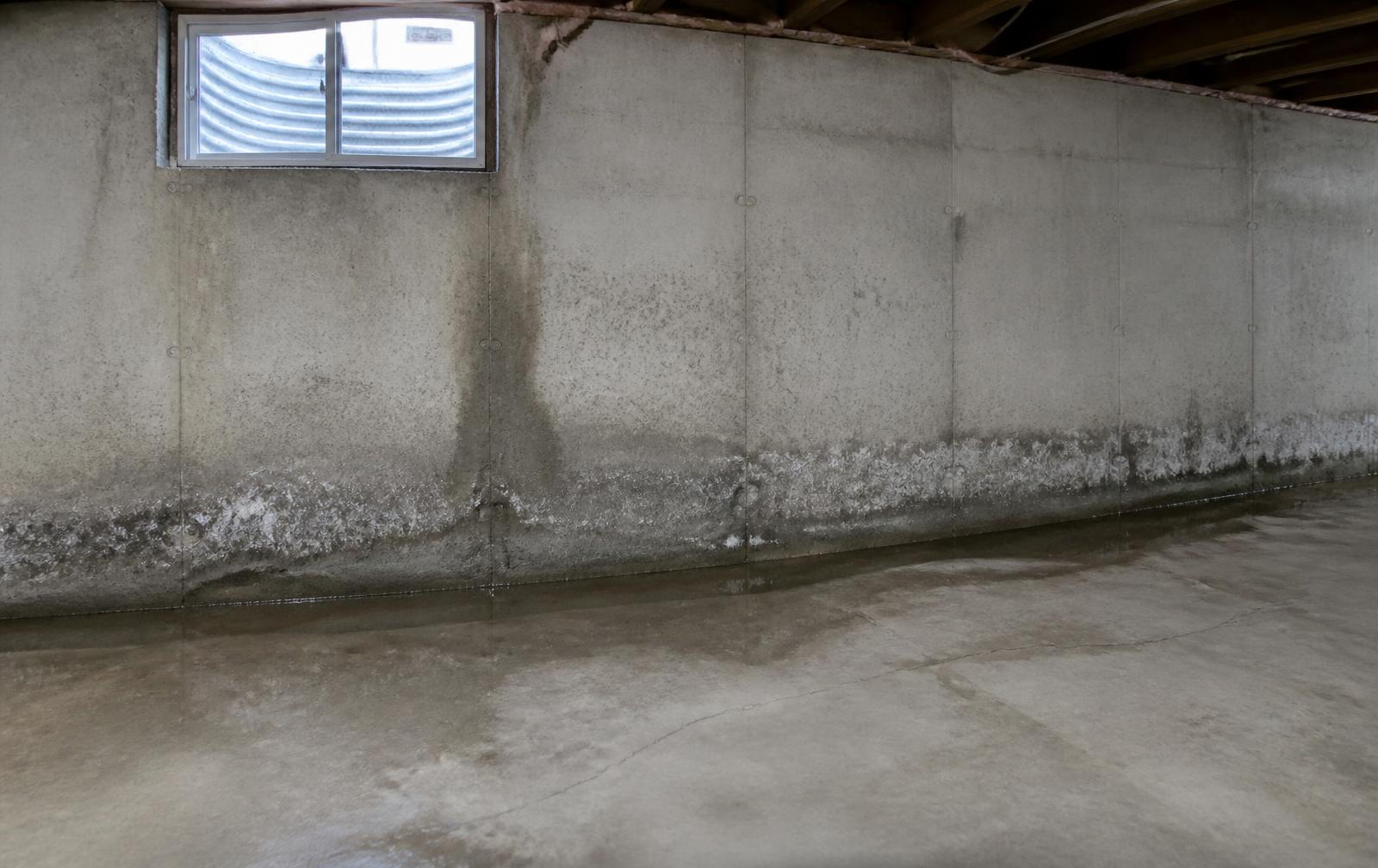
Ohio basements rarely leak because concrete failed. They leak because the soil beside the foundation holds water. Clay-heavy backfill drains slowly, spring rain and snowmelt stack up, and the water table beside the wall rises above the floor slab.
At that point water is under pressure and needs an exit. The seam where the floor slab meets the wall is the easiest one, followed by shrinkage cracks, tie-rod holes and mortar joints in block walls.
- Water at the wall-floor joint — pressure-driven seepage along the footing
- Water only after heavy rain — surface drainage and groundwater surge
- Leaking wall cracks — direct path through poured concrete
Repair Paths
Solutions used in Ohio homes
Most projects combine two of these: something that collects water and something that moves it away from the house.
- 01
Interior Drain Tile
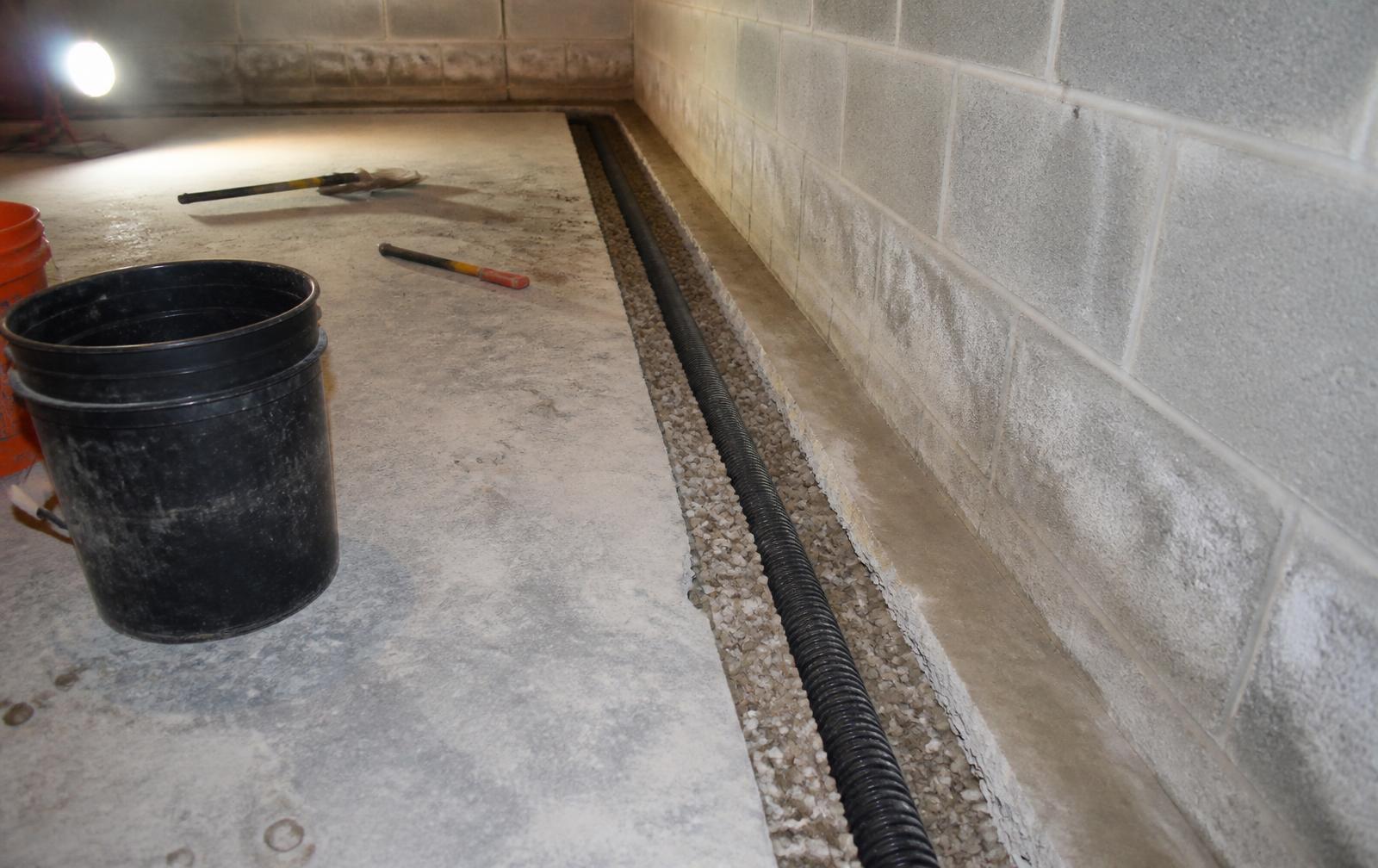
A perforated line set in gravel below the slab at the foundation perimeter, tied into a sump pit. The standard retrofit for pressure-driven seepage.
- 02
Exterior Waterproofing
Excavation to the footing, wall preparation, membrane, drainage board and a footing drain. Protects the wall itself rather than managing water indoors.
- 03
Sump Pump Systems
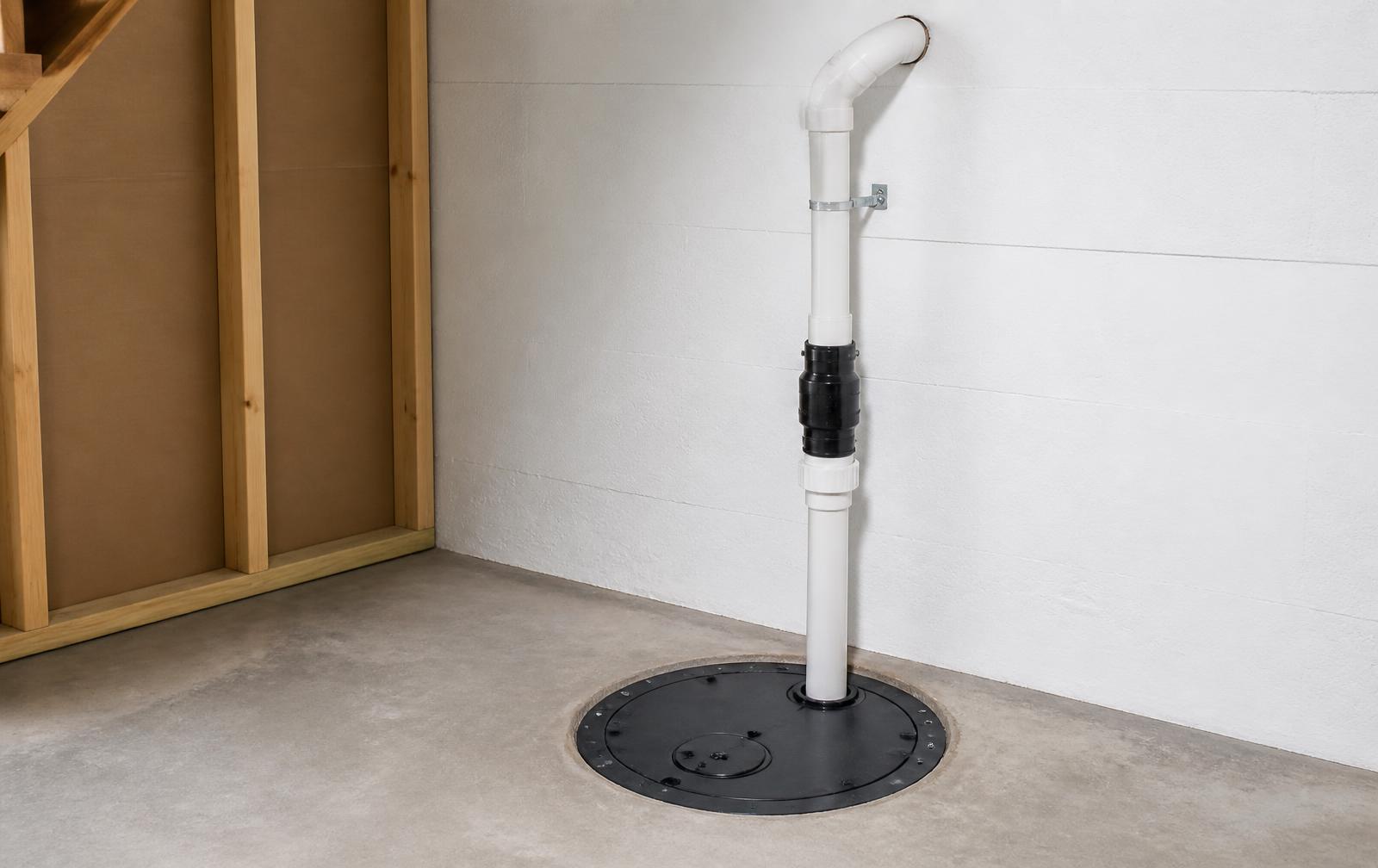
The discharge end of any interior system: pit, pump, check valve and a discharge line routed well away from the foundation.
- 04
Drain Tile Repair
Clogged, silted or collapsed lines in older homes. Inspection first, because replacing a line that still works is wasted money.
- 05
Crack Repair
Polyurethane or epoxy injection for leaking poured-wall cracks, where the crack is the actual entry point.
Decision Point
Interior or exterior?
The short version: interior systems manage water that has already reached the foundation; exterior systems try to keep it off the wall in the first place.
| Factor | Interior System | Exterior System |
|---|---|---|
| Excavation | None outside; trench cut inside along the wall | Full excavation down to the footing |
| Typical cost | Generally lower | Generally higher |
| Disruption | Concrete dust and interior access | Landscaping, walks, decks and porches affected |
| Best fit | Retrofit on a finished lot with pressure seepage | Wall protection, failed original footing drains, additions |
Budget
What Ohio projects generally cost
Educational ranges, not quotes. Linear footage, water source, access and whether a sump is involved move the number more than anything else.
- Basic waterproofing work$2,500 – $7,500
- Interior drainage / French drain type system$3,000 – $12,000
- Full interior perimeter drainage + sump$5,000 – $15,000
- Sump pump installation or replacement$1,200 – $2,500
- Exterior drainage and water management$4,500 – $18,000
- Extensive exterior waterproofing$8,000 – $25,000+
Local Coverage
Search by ZIP area
Housing stock changes what fails. Pick your ZIP for local basement context, or enter it in the request form below.
- 44118Cleveland Heights, OHBasement waterproofing →
- 43214Columbus, OHBasement waterproofing →
- 44313Akron, OHBasement waterproofing →
- 45419Dayton, OHBasement waterproofing →
- 43606Toledo, OHBasement waterproofing →
- 44512Boardman, OHBasement waterproofing →
- 43017Dublin, OHBasement waterproofing →
- 44718Canton, OHBasement waterproofing →
How Requests Work
Three steps
- 1
Describe the water problem
Where the water shows up, and whether it follows rain.
- 2
Enter your ZIP and phone number
Your ZIP determines which local providers see the request.
- 3
Request a local estimate
Scope and pricing are set by the provider after they review the details.
Availability varies by area and season. Nothing here guarantees same-day contact or a fixed price.
Get a Free Basement Waterproofing Estimate
Tell us what’s happening in your basement and request local pricing.
No obligation. Takes less than a minute.
Step 1 of 2
Ohio Basement Waterproofing FAQ
- Why does my basement leak after heavy rain?
- Rain saturates the soil around the foundation faster than it can drain away. The water table beside the wall rises, pressure builds against the footing and wall, and water follows the path of least resistance — usually the wall-floor joint, a tie rod hole or a shrinkage crack. A basement that only leaks during storms is almost always a drainage problem rather than a plumbing problem.
- Is interior basement drainage considered waterproofing?
- It is more precisely water management. An interior drain tile system does not stop water from reaching the outside of the wall; it collects water that arrives below the slab and moves it to a sump pit before it reaches the floor. For most Ohio basements that behavior is what keeps the space dry, which is why interior systems are the common retrofit.
- How much does basement waterproofing cost in Ohio?
- Most residential projects land between roughly $2,500 and $15,000 depending on linear footage and whether a sump system is included. Exterior excavation work runs higher, commonly $8,000 to $25,000 or more. The cost page breaks the ranges down by scope.
- Do I need a sump pump with an interior drainage system?
- Nearly always. Interior drain tile has to discharge somewhere. Unless the lot allows a gravity outlet below the footing elevation, collected water is routed to a sump pit and pumped out. A drainage system without a working discharge point simply fills up.
- Can foundation cracks cause basement leaks?
- Yes. A non-structural shrinkage crack in a poured wall can pass a surprising amount of water when the soil outside is saturated. Injection sealing addresses the crack itself; if water is also entering at the floor line, the crack was only part of the picture.
- Is exterior waterproofing always necessary?
- No. Exterior membranes and footing drains are the right call when the wall itself needs protection, when the exterior drainage was never installed correctly, or when finished exterior conditions allow excavation. Many Ohio homes are dried out successfully with interior drainage at a lower cost and less disruption.
- How do I know if my drain tile has failed?
- Signs include water on the floor in a basement that used to stay dry, a sump pit that stays empty during storms while the floor is wet, silt or iron deposits at the discharge, and gurgling that stops abruptly. A camera inspection of the existing line is the practical way to confirm it.